Tech Tip: Excessive Starter Voltage Drop Prevents Proper Operation

Tech Tip: Excessive Starter Voltage Drop Prevents Proper Operation

Most people assume the starter is grounded because it is bolted to the engine. However, that does not mean it's grounded properly. The combination of road dirt, salt corrosion, engine heat and vehicle age can prevent a good starter-to-engine ground (metal-to-metal contact). A good ground path should measure zero voltage loss (no voltage drop).

Application: All vehicles with 12-volt starter motors.

Problem: Slow cranking starter or no crank at all.

Cause: Possible faulty ground that prevents full voltage to the starter motor.


Solution:

Most people assume the starter is grounded because it is bolted to the engine. However, that does not mean it’s grounded properly. The combination of road dirt, salt corrosion, engine heat and vehicle age can prevent a good starter-to-engine ground (metal-to-metal contact). A good ground path should measure zero voltage loss (no voltage drop). It is possible that a loose starter, corroded surfaces or faulty ground cables are stealing cranking voltage from the motor. If you just replaced the starter and it cranks slow or not at all, test for a proper ground by using a voltmeter – test, don’t guess!
Test Procedure:
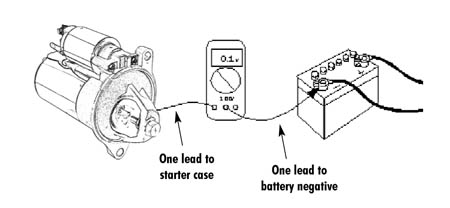
Safely disable the ignition or fuel pump so the engine won’t start. Connect one voltmeter lead to a clean spot on the starter case, and then the other voltmeter lead to the negative battery terminal. Set the meter to the one volt DC scale. With key-on-engine-off, voltage must not exceed 0.1 volts. Now crank the engine for 10 seconds maximum while watching the meter readout. The voltmeter reading should not exceed 0.5 volts. If the voltage drop is greater, look for a ground cable problem or an improperly grounded starter motor as described above.

Tech Tip courtesy of CARDONE.

For additional information on products offered by CARDONE, visit www.cardone.com.

You May Also Like

Fuel Pumps and Cranking

Diagnosing the problem comes down to understanding what causes a loss of fuel pressure.

Here is a diagnostic puzzle: An owner comes to your shop complaining that it takes longer than expected to start his car’s engine in the morning. There are no codes for the crankshaft and camshaft sensors. And, the oil pressure is within specifications. If you are lucky, you might have a code for low fuel pressure on the high side of the direct injection system. What could be the source of the problem?

Melted Connectors

Too Much Current…or Something Else?

Solving Intermittent Overheating

New cooling systems anticipate and influence changes in coolant temperature.

Hyundai Genesis Dongle Causing Multiple Issues

Aftermarket dongles may interfere with the Control Area Network (CAN) system, causing issues.

Audi Remote Key Inoperative

Replacing the remote will not resolve the concern. 

Other Posts
Mercedes-Benz: Replacing Bolts at Steering Gear

Work procedures vary slightly for certain platforms. This article outlines the different procedures to follow.

ADAS Calibration Aborts

Knowing the common “hiccups” can save you time and money.

Strut Sales

It all comes down to educating the customer about the benefits and asking for the sale.

Hyundai DDMS Customer Complaints

The following Advanced Driver Assistance Systems (ADAS) features may be affected.