
By Gary Goms
Although shop owners are routinely encouraged by industry leaders to provide from 40 to more than 100 hours per year training for each technician, some shop owners are failing to see a return on their training dollar. If, for example, a technician attends a daytime or weekly class, the shop loses its productive output for that period.
In other cases, the technician simply fails to benefit from the training offered because the training is too basic, too advanced, too repetitive or not applicable to the technician’s job description.
FORMAT FORMATIONS
In response to the demand for individualized basic and advanced training, technical training is available in more formats than ever before. To illustrate, the jobber-training clinic is still the staple of the training industry because the local jobber provides the infrastructure and venue. Consequently, jobber training remains an effective method of introducing new products and technology to the technician working in the field.
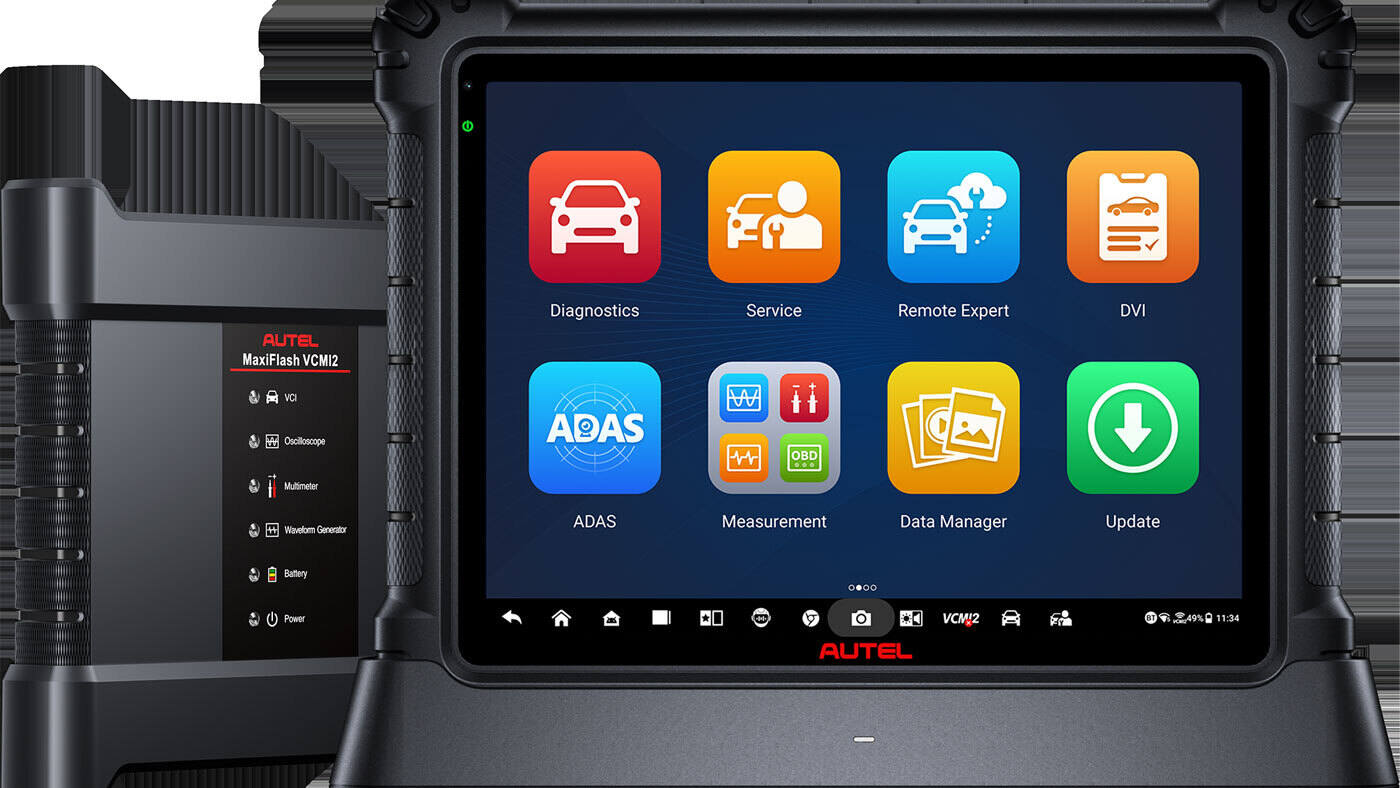
At another level, equipment manufacturers offer the prerequisite training needed to maximize the use of their products. In most cases, this training is offered on-site as part of an equipment purchase and is conducted via a company or contract trainer. One downside of equipment manufacturer training is that it’s not on-going and is relatively unavailable to the general technician population. Another downside is that the technician often must travel long distances and take time away from his job to attend equipment manufacturers’ classes.
Independent trainers, on the other hand, are developing very advanced-level training packages aimed at teaching master technicians new diagnostic and repair techniques. In addition to offering on-site training, independent trainers also have begun distributing advanced-level and technical update training on video tapes or DVDs. This method allows technicians to learn at their own pace and convenience. Moreover, companies specializing in video learning can compose and record a class and ship it directly to technicians who can take advantage of this type of training.
OVERHEAD ISSUES
The most important step in getting a profitable return on training is to understand the economics of paying for training in a modern-day auto repair shop. Like other businesses, your auto repair shop has a core of fixed expenses that include items like the rent, utilities, taxes, insurance and short-term equipment loans. Unlike other businesses, however, a repair shop also must support an aggregation of services that can be profitably packaged and sold to the motoring public.
It helps to visualize each service as a separate layer of overhead that the shop must support. If, for instance, a shop provides air conditioning service, it must first buy the equipment and supplies, which is the first layer. It must also buy the training needed to educate and license its technicians, which is another layer of expense.
The shop might temporarily avoid the training cost by hiring a technician already trained and licensed to perform air conditioning work, but as new systems and technologies are introduced, the shop may find that it needs to budget an increasing amount of money for training.
So, as technology progresses, the air conditioning training becomes another layer of overhead stacked onto the air conditioning equipment overhead, which is stacked atop the core overhead of the rent, utilities, taxes insurance and short-term loans. In each case, offering a new service creates a new layer of overhead that must, in turn, create a new level of profitability that must be expressed in terms of a higher hourly rate in order to sustain itself.
MAKING IT MARKET-SPECIFIC
How can small shops control training expenses? A smaller shop might, for example, reduce equipment expenses and training time by specializing in bumper-to-bumper servicing of a single corporate line. On the other hand, another shop might specialize in a narrow aggregation of services such as undercar services for both domestic and import brands. Again, the shop has narrowed its service menu to reduce equipment and training costs. Consequently, the undercar specialist’s training needs might be better served by targeting or dedicating its training dollar to learning new alignment processes and troubleshooting techniques.
In contrast, a large general repair shop can utilize a broader range of training because it may provide a broad range of services to a broad range of vehicles and consumers. While a small shop may control its expenses by sending all of its technicians to dedicated training courses, the large shop may target its training expense by sending, for example, its driveability specialist to an independent training facility a thousand miles away to learn new diagnostic techniques. Or, it may send its alignment tech to an equipment manufacturer’s class to learn the use of new wheel alignment equipment or new alignment techniques. In any case, the larger general repair shop’s training dollars are usually best spent on training individual technicians for specialized tasks.
GENERIC vs. DEDICATED TRAINING
Obviously, getting the best return on the training dollar means that we first understand that training is becoming more dedicated or manufacturer-specific. Modern electronic technology is, for example, allowing vehicle manufacturers to design vehicles that use specific operating systems and strategies. Because many of these differences have to do with how “the chip” in an engine management system is programmed to operate the vehicle electronics, diagnostics may not be the same for formerly generic systems like fuel, ignition or charging systems.
Consequently, generic training often fails to create value for many shops. Instead, a shop may find the nameplate or systems-specific training to be more cost-effective. Here again, many independent trainers have taken up the challenge by assembling specialized technical information on various nameplates and, in some cases, “reverse-engineering” the vehicle’s various operating systems to create more efficient and profitable diagnostic procedures.
SKILL-BASED TRAINING
Look, we all understand that training is expensive, with costs averaging $200 per day for a one-day class and $1,500 for a one-week class. Training tapes and DVDs, on the other hand, usually cost between $100 and $300, depending upon the length and technical sophistication of the content. Although jobber classes are usually presented free of charge, more jobbers are charging a small fee intended to cover the cost of bringing the training to the local level.
To again achieve the most value for their training dollar, a shop should acquire training that’s appropriate for skill level of individual technicians. If the shop has several apprentice technicians, it may need basic training in a technical specialty such as wheel alignment, which is most often available either through a local community college or via a series of basic training videos. If a shop has experienced technicians, it usually needs update or advanced training. Update training is most often available through jobber clinics and video sources. Advanced training often requires the technician to be a Certified Master Auto Technician with the L1 certification in Advanced Engine Performance (CMAT L1). In this case, the training may be available through an independent trainer specializing in topics like diesel or gasoline engine diagnostics and repair. In many cases, advanced training requires a shop to plan ahead of time by placing its name on the trainer’s waiting list in order to be included in future presentations.
TRAINING SUMMARY
The most important point for shop owners to remember is to keep the training at an appropriate level and directed toward the technician’s job description. Next, you should remember the benefits of cross-training. If a shop buys into training videos, it can create a library from which all new entry-level or advancing technicians can access training. If your shop needs expensive advanced-level training, send the technician who’s best qualified to benefit from the training. In most cases, that technician may cross-train his fellow technicians in the subject matter that he’s learned in his advanced class.
In any case, keeping training targeted on the appropriate skill level and job description of the technician is the key to getting the biggest bang for your training dollar.
ASE-certified Master Technician and vocational trainer Gary Goms is owner of the Buena Vista Auto Clinic in Buena Vista, CO. He has earned the ASE L-1 certification. He also is a MACS- and IMACA-certified Air Conditioning Technician.